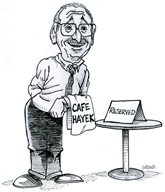
Arnold Kling ponders envy and the “hatred of others’ profits.” Two slices:
Years ago, I came up with the acronym FOOL, for Fear Of Others’ Liberty. I use it to explain how the public comes to accept government policies that take away freedom. You believe that you are better off making your own decisions. But the other guy? Don’t trust him to save for his own retirement. And better keep him, or at least his children, away from social media.
More recently, we see support for wealth taxes and for socialism. We see animosity toward successful businesses and entrepreneurs. We can call this HOOP, or Hatred Of Others’ Profits. Like FOOL, HOOP invites political demagogues to achieve an expansion of government power at the expense of individual liberty.
…..
Profits often reflect a contribution to overall welfare. Profits are earned within a positive-sum game for society. Profits induce firms to serve consumers and to innovate. Losses force inefficient and outmoded businesses to adapt or shut down.
HOOP is the opposite point of view. It regards profits as something that businesses take from the rest of us, as if we can take innovation and efficiency for granted. HOOP acts as if we are in a zero-sum environment in which one person’s gain is necessarily another person’s loss.
Latin America’s political right has been cleaning up at the ballot box for three years, but on Sunday it suffered a setback in Brazil. Leftist President Luiz Inácio “Lula” da Silva of the Workers’ Party defeated Senator Flávio Bolsonaro of the conservative Liberal Party 51.8% to 48.2%.
Mr. Bolsonaro led in the first voting round, and the socialist’s comeback victory surprised markets—not least because Brazil’s $2.6 trillion economy is sputtering and wages aren’t keeping up with inflation. But Lula has won a fourth term, and maybe there’s justice in his victory. He now has to clean up the mess he inherits from himself when his new term begins in January.
Brazil’s main stock index fell 10% at the opening Monday and trading was halted. When it resumed the sell off continued. It closed down nearly 14%. State-owned oil company Petrobras ADRs lost 14% and Itaú Unibanco ADRs fell 20%. The iShares MSCI Brazil ETF (EWZ) dropped 19.4%. The real lost 8.7% against the dollar. Brazil’s treasury canceled government bond auctions scheduled for this week.
Brazilian GDP grew a mere 2.3% in 2025 and this year may not hit 2%. That’s not enough to reduce poverty while the rest of the world runs ahead. The Workers’ Party has held the presidency for nearly 18 of the last 24 years. In that time 14 countries have overtaken Brazil in per capita GDP, including the Dominican Republic, Guyana and Thailand.
A gusher of government spending after the first round of voting is a clue to how Lula hung on. Brazil will end the year with a fiscal deficit close to 10% of GDP, which means deficits will exceed 8% each of his last four years. Public debt is above 82% of GDP and rising.
New England’s only Republican senator persuaded the Trump administration last week to ease tariffs on nine categories of Canadian products vital to Maine’s economy. The preelection exemptions underscore both the power of Senate Appropriations Committee Chair Susan Collins (R-Maine) and the fundamental folly of protectionism.
Against the backdrop of President Donald Trump’s unpopular trade war with Maine’s northern neighbor, Collins announced on Friday that tariff exemptions will extend to products such as corrugated paper, plastic boxes and cases, plastic packing bags and sacks, agricultural cleaning and grading machinery, and edible seaweed products. The adjustments are meant to help Maine’s agriculture industry.
Wild blueberry growers, for example, rely on specialized Canadian harvesting boxes designed to work with their existing processing equipment. An American supplier of some cardboard agricultural totes recently stopped making them, leaving growers with no domestic alternative, according to Collins.
Protectionists see tariffs as a shield around American producers. Maine shows the silliness of that analogy. Producers are also importers. Farmers need machinery. Manufacturers need components. Builders need cement. Municipalities need road salt. Paper mills need pulp. Impose an import tax on those inputs, and everything they go into costs more.
There is no economic principle under which a Maine blueberry grower deserves help while a manufacturer in a state without a toss-up Senate race deserves to pay a punitive tax on an equally indispensable Canadian input. What distinguishes them is politics. This leads to arbitrary decisions. For example, in the same announcement that gave relief to Maine, Trump imposed new 50 percent tariffs on a hodgepodge of other Canadian products, including shampoos, carpets, cocoa powder, vinyl flooring, wall-installed air conditioners, yacht parts and canoes.
Eric Boehm makes clear that “Trump’s tariffs are politically toxic.” A slice:
[Sen. Susan] Collins issued a statement thanking the White House for the changes. This is what members of the U.S. Senate have been reduced to—begging the president to cast his capricious, tariff-happy eyes toward products that will hurt people in other states more than in your own. (In fairness to Collons, she has voted repeatedly to roll back Trump’s tariffs, but not enough of her fellow Republicans went along with it.)
Still, it’s worth asking: What exactly is the pitch to voters here? Here’s a tariff cut, now vote for Republicans so the president can continue to arbitrarily tax imports whenever the mood strikes?
It’s easy to see why Trump’s tariffs have become so unpopular. They are a huge and broad tax increase—the Tax Foundation estimates that 54 percent of imports are subject to Trump’s tariffs, which are costing the average household about $1,000 annually—that was imposed without congressional authorization or popular support. They create more losers than winners, as downstream businesses and consumers pay the price for the protectionism offered to American manufacturers. Even the supposed “winners” of the tariff policy tend also to be “losers,” since so much manufacturing depends on importing raw materials and intermediate goods.
Here’s yet more evidence that Julian Simon was correct. (HT Scott Lincicome)
Synthetic control methods hold the promise of identifying a credible counterfactual by closely reproducing pretreatment outcome paths. Their reliability, however, depends in part on how effectively they constrain researchers’ less-visible degrees of freedom. We explore these methods’ sensitivity by constructing 1440 plausibly defensible specifications to estimate the employment effect of California’s $20 fast-food minimum wage. While over 96 percent of the estimated employment effects are negative, the range is vast, illustrating that synthetic control methods are sensitive to specification choice. Estimates from simpler and far more transparent difference-in-differences methods lie near the centers of the comparable distributions of synthetic control estimates.
 This “slippery slope argument” is rooted not in paranoia, but history. The best predictor of future behavior is past behavior. In the past, when governments received the power to cheaply remedy glaring market failures at low cost, they could have done so and declared victory. They almost never did. Indeed, governments spurned streamlined textbook fixes – like taxing negative externalities and subsidizing positive externalities – from the get-go. Issuing edicts – “command and control” – has far more demagogic appeal. Once governments start issuing edicts, they keep issuing. Angry complaints and shocking incidents organically arise – and the crowd-pleasing response is not cost-benefit analysis, but “decisive action” against malefactors of great wealth and alien lands.
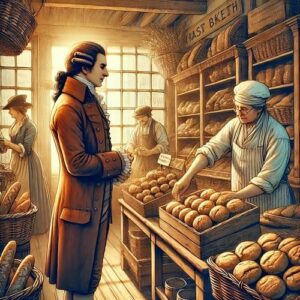 One feature of commercial society is that it provides many people with more space for acting and making choices freely about what ends they decide to pursue – at least compared to previous social arrangements. But this liberty goes along with greater interdependence on others; thus, far from encouraging radical individualism, commercial civilization demonstrates that we are intrinsically social beings.
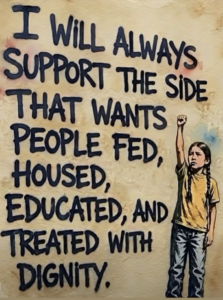 It’s truly insane how many people’s entire political viewpoint is centered around self-righteous nonsense built entirely around strawmen & caricatures of their — overwhelmingly imaginary — opponents.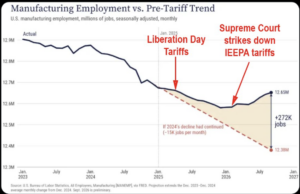
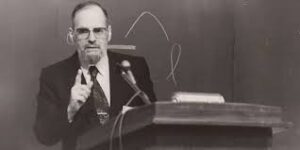 What is important about the market economy is that unexploited opportunities for reallocating resources from one (low market valued) use to another of higher value offer the opportunity for pure entrepreneurial gain. A misallocation of resources occurs because, so far, market participants have not noticed the price discrepancy involved. This price discrepancy presents itself as an opportunity to be exploited by its discoverer. The most impressive aspect of the market system is the tendency for such opportunities to be discovered.
 Despite desperate efforts of activists to keep “hunger in America” alive as an issue by manipulating numbers, actual examinations of flesh and blood people show no nutritional differences between people in different income brackets. In contrast to the gaunt and undernourished poor of other times and places, Americans in the lower income brackets today are slightly more likely to be overweight than is the rest of the population.